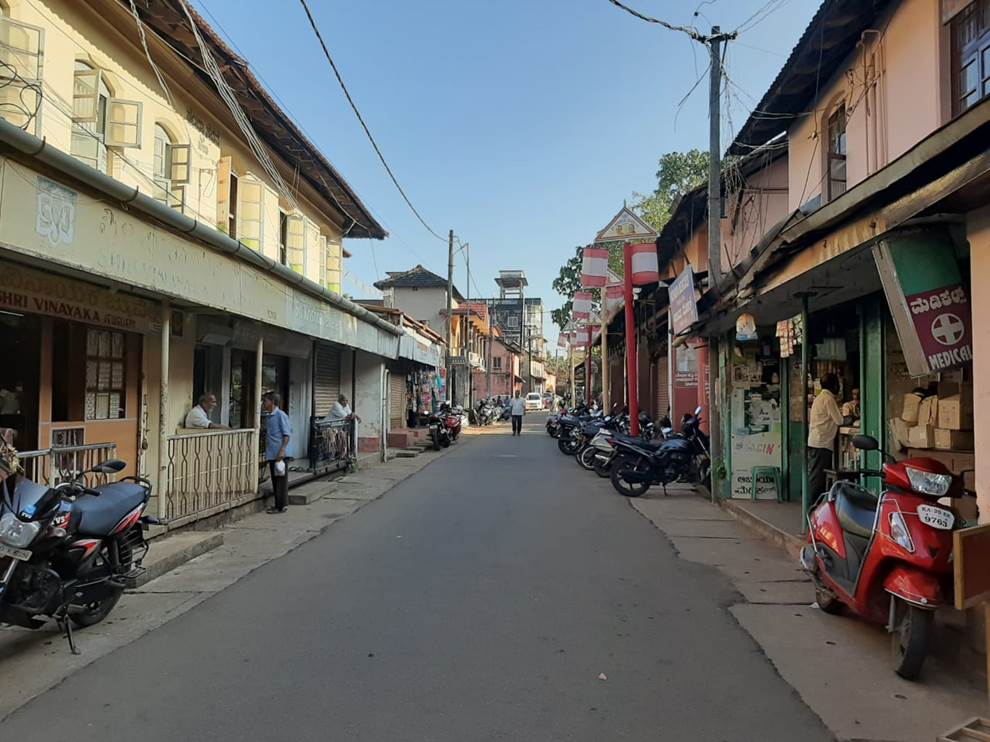
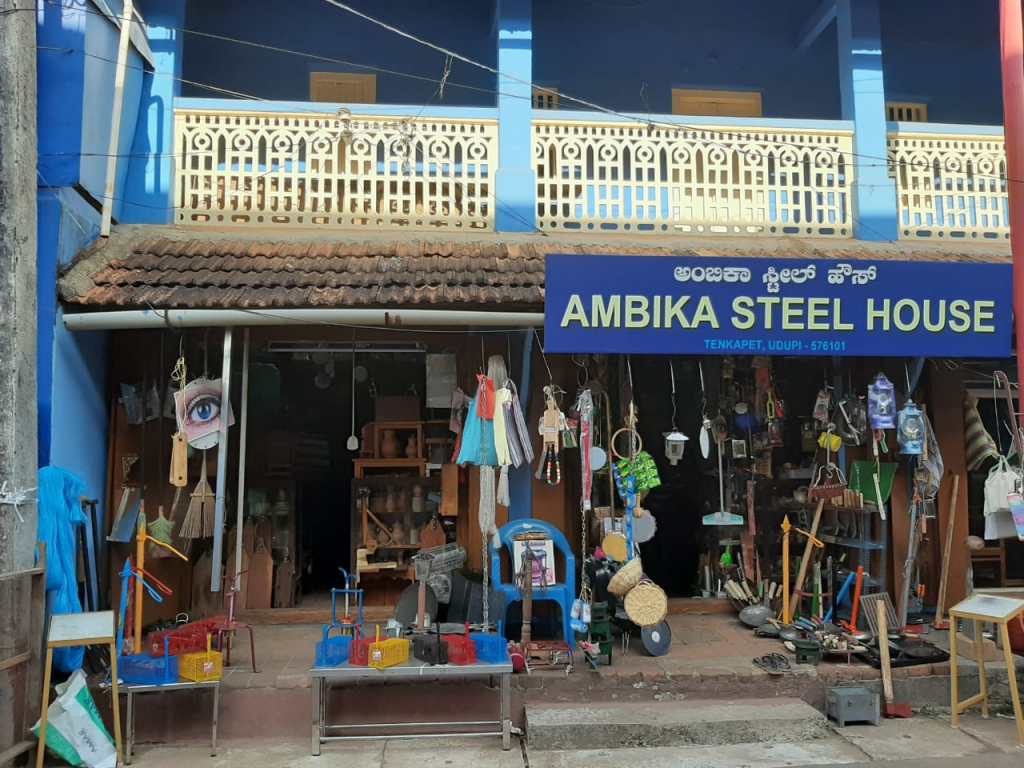
The street has one of the oldest jewelry shops and steel shops which depict how the temple setting helped in evolution of commercial activities around the temple.
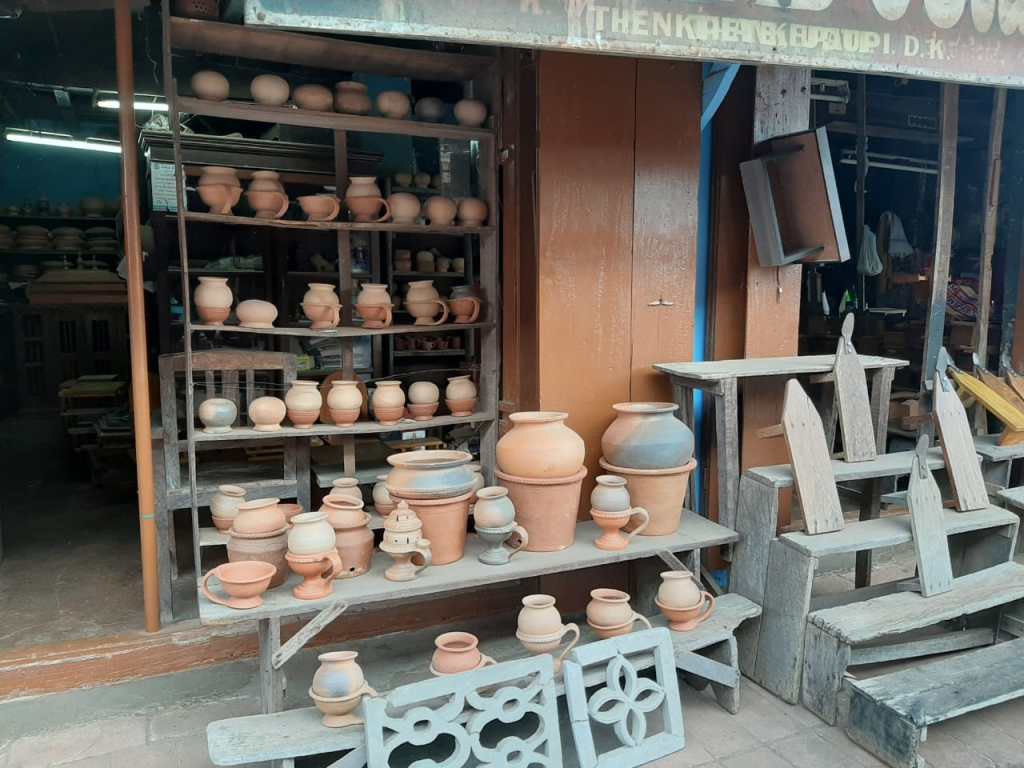
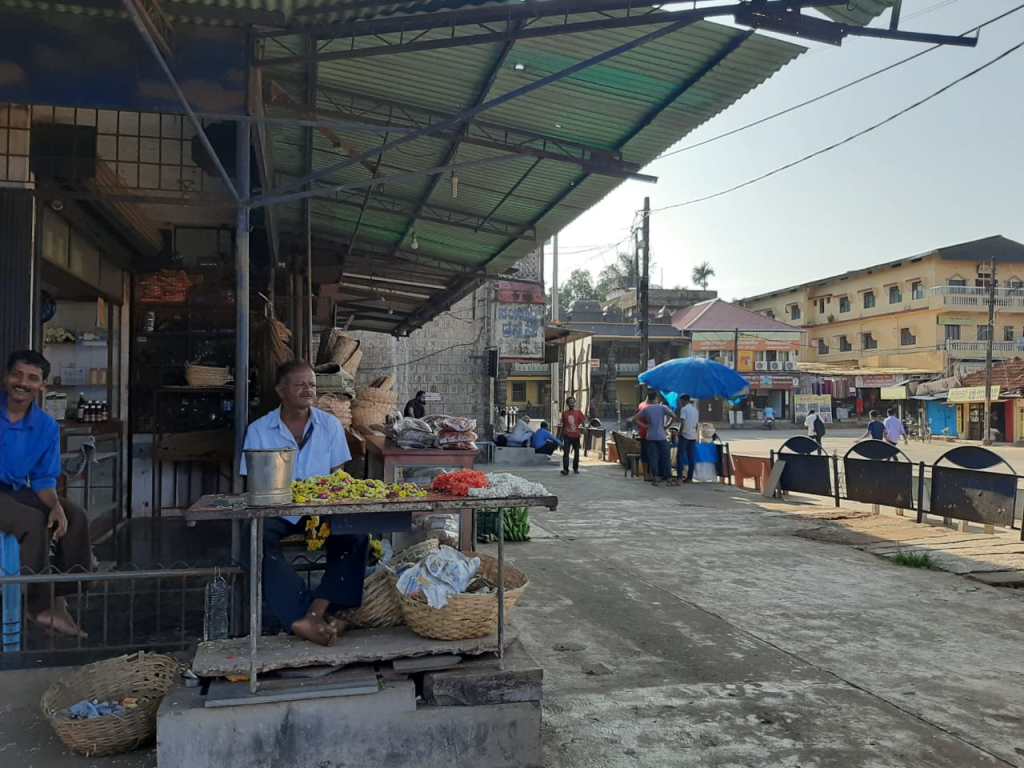
The shopping setups are 20 – 30 years old while the built form dates back to more than 60 years.Shops extend into the street with the articles displayed on the shop plinths.
The street has vibrant colors and numerous sound which stimulate the visual and other senses.
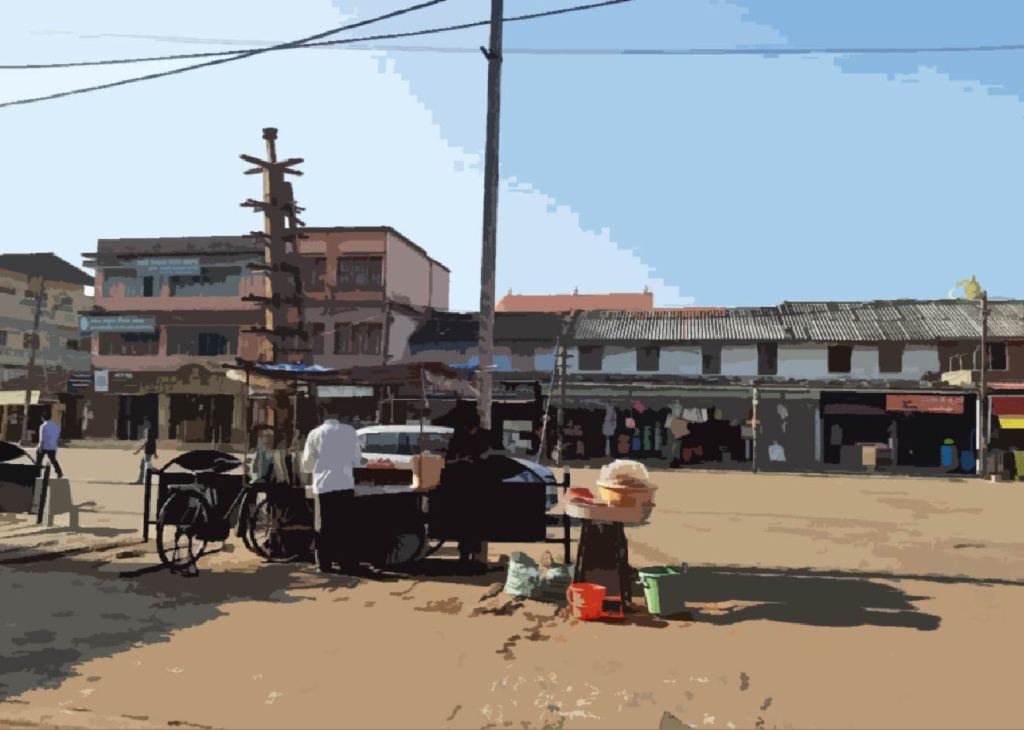
The street has a high pedestrian activity along with 2 and 3 wheeler movement up to the gate that marks the entrance to the ratha beedhi premises. In comparison with the the other five streets that lead to the ratha beedhi, the street is much wider, coping for various kinds of social and financial interactions also permitted by the various interface spaces recognized from our documentation.

How has interface spaces helped in the past?
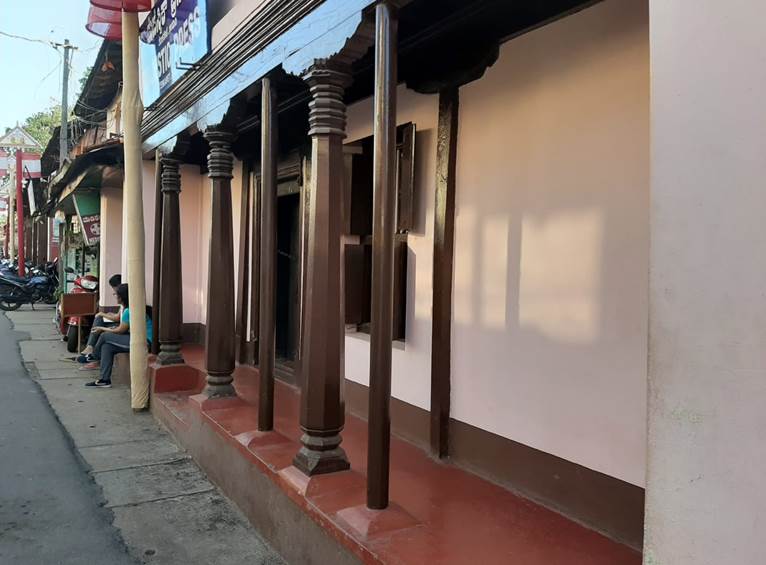
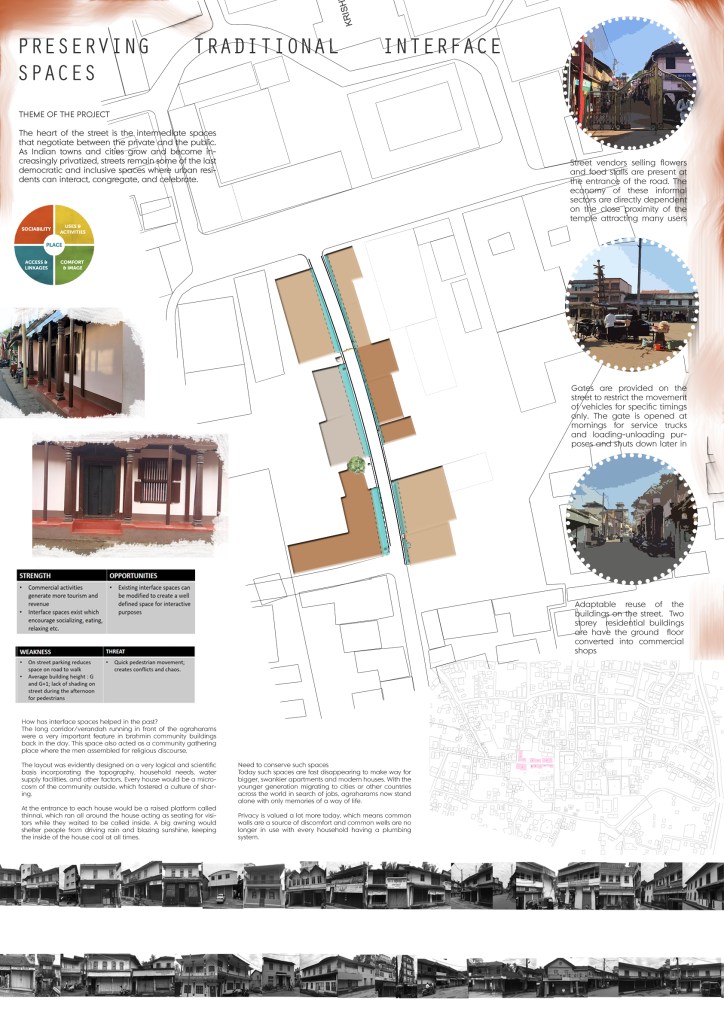
The long corridor/verandah running in front of the agraharams were a very important feature in brahmin community buildings back in the day. This space also acted as a community gathering place where the men assembled for religious discourse.
The layout was evidently designed on a very logical and scientific basis incorporating the topography, household needs, water supply facilities, and other factors. Every house would be a microcosm of the community outside, which fostered a culture of sharing.
At the entrance to each house would be a raised platform called thinnai, which ran all around the house acting as seating for visitors while they waited to be called inside. A big awning would shelter people from driving rain and blazing sunshine, keeping the inside of the house cool at all times.
Need to conserve such spaces
Today such spaces are fast disappearing to make way for bigger, swankier apartments and modern houses. With the younger generation migrating to cities or other countries across the world in search of jobs, agraharams now stand alone with only memories of a way of life.
Privacy is valued a lot more today, which means common walls are a source of discomfort and common wells are no longer in use with every household having a plumbing system.
The expenses of Udupi Krishna Matha are borne by the voluntary contribution of devotees and by Ashta matha’s which manage the Krishna mutt. The contribution may be in cash or kind.
The street begins to witness people at 4am as daily prayers begin with the blowing of a conch shell.
Rathbeedi in Udupi is a circular road surrounded by temples. At the centre stands the Chandramauleshwar temple and the Ananteshwara temple, the road runs around these temple and forms an oval – circular track. The Udupi Krishna Mutt, the Raghavendra Swami Mutt, various other mutts, shops and hotels are situated along the outer circumference of the road.
 Bell the cat